Research

Computational chemistry for bonding, pressure, and materials discovery.

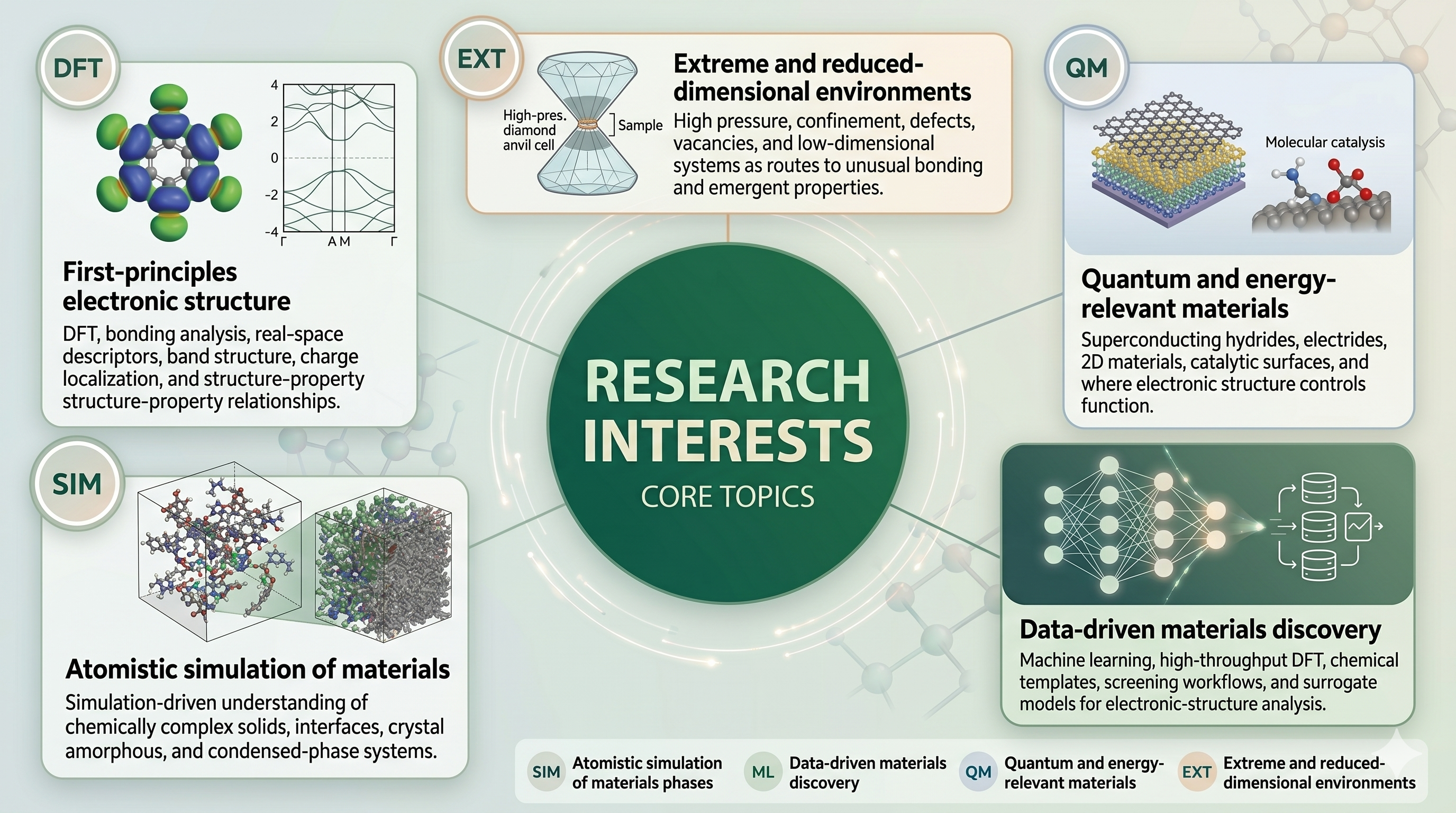
I study how bonding and electronic structure change under pressure and reduced dimensionality, and how machine learning can accelerate the search for new materials.

My work combines first-principles electronic-structure calculations, crystal-structure prediction, high-throughput workflows, and machine learning to understand materials where conventional chemical intuition becomes strained.

Electronic structure High pressure Structure discovery ML workflows
Scientific montage showing a compressed crystal, an electron-localization field, and a machine-learning workflow
From atomic structure to real-space electronic descriptors to materials discovery.

Research Themes

Scientific questions connected by bonding and electronic structure.

Real-space electronic structure

Electron localization, ELF prediction, interstitial bonding, and field-based descriptors.

High-pressure materials

Superhydrides, molecular hydrogen, pressure-induced bonding, and superconductivity.

Data-driven discovery

Chemical templates, high-throughput DFT, ML screening, and structure prioritization.

Reduced-dimensional chemistry

2D electrides, TMDCs, vacancies, adsorption, and tunable interstitial electrons.

Featured Projects

Artifacts that show the research program forming.

Poster thumbnail for symmetry-aware prediction of electron localization functions

Real-space electronic structure

ELFNet and electronic-structure prediction

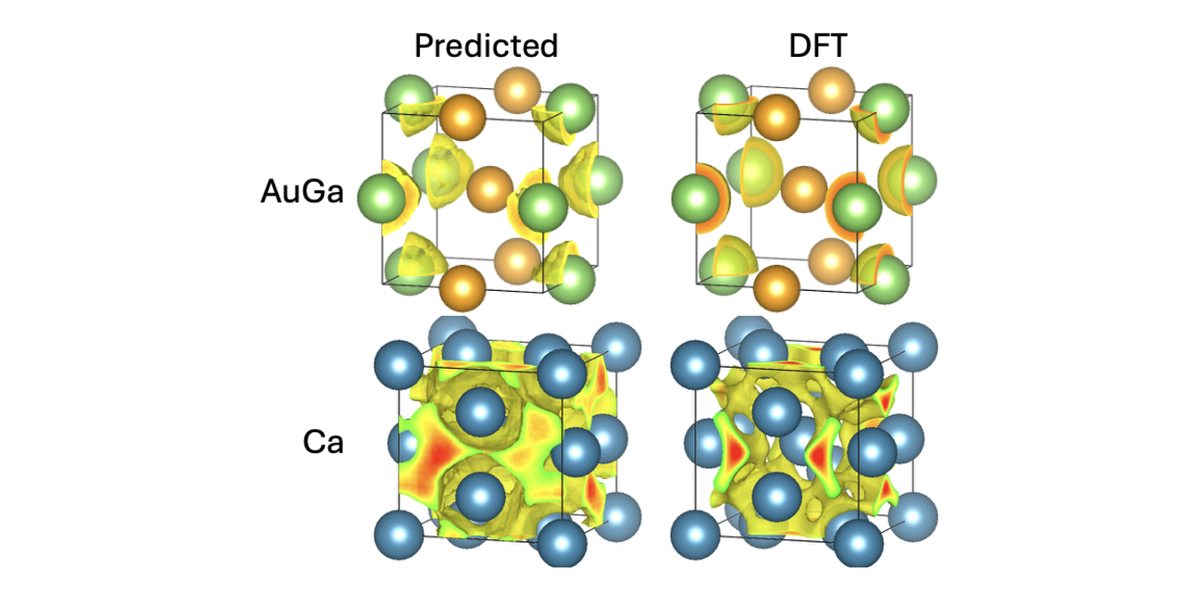
Real-space electronic-structure prediction from superposed atomic densities.

Scientific question
Can electron localization be screened before full electronic-structure post-processing?
Approach
Periodic 3D CNNs map superposed atomic density grids to DFT electron localization functions.
Main idea
Fast ELF prediction can expose bonding and interstitial localization early in screening.
PyTorch 3D CNN Periodic grids VASP ELF
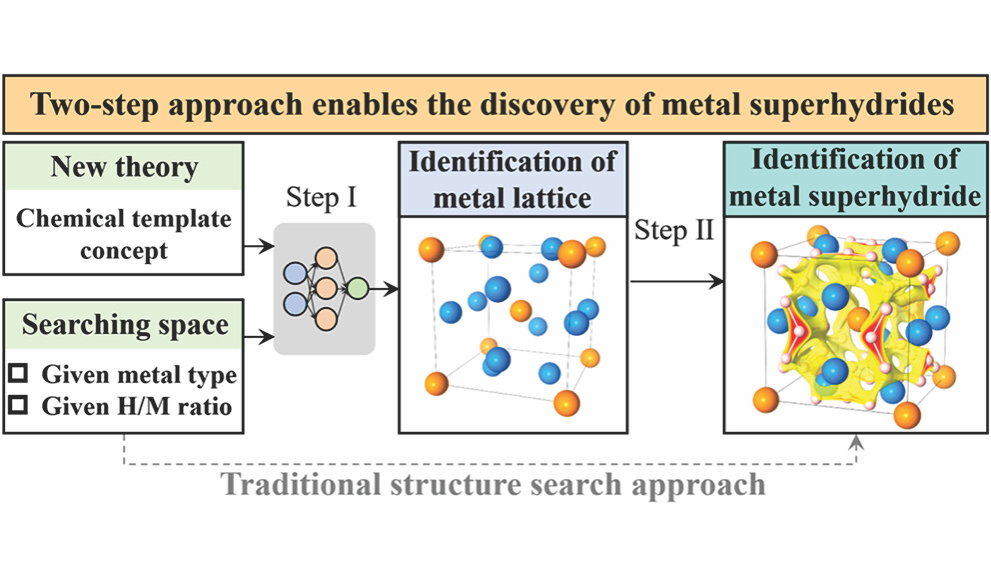
Two-step chemical-template workflow for discovering metal superhydrides

Chemical-template discovery

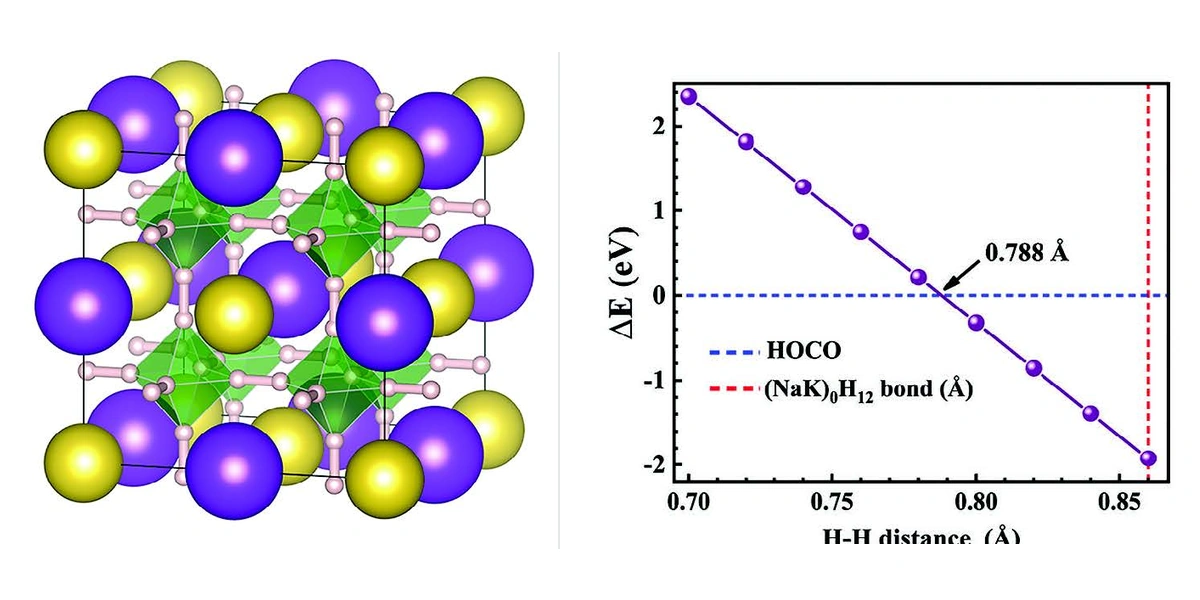
Metal superhydrides from chemical templates

Template-guided machine learning for complex high-pressure hydrides.

Scientific question
Can chemical templates reduce the search space for complex high-pressure hydrides?
Approach
Machine-learning screening, convex-hull validation, and first-principles calculations.
Main idea
Localized interstitial electrons can organize metal sublattices into new hydride prototypes.
DFT Convex hulls Templates ML screening
Poster thumbnail for molecular hydrogen metallization under high pressure

Pressure-driven bonding

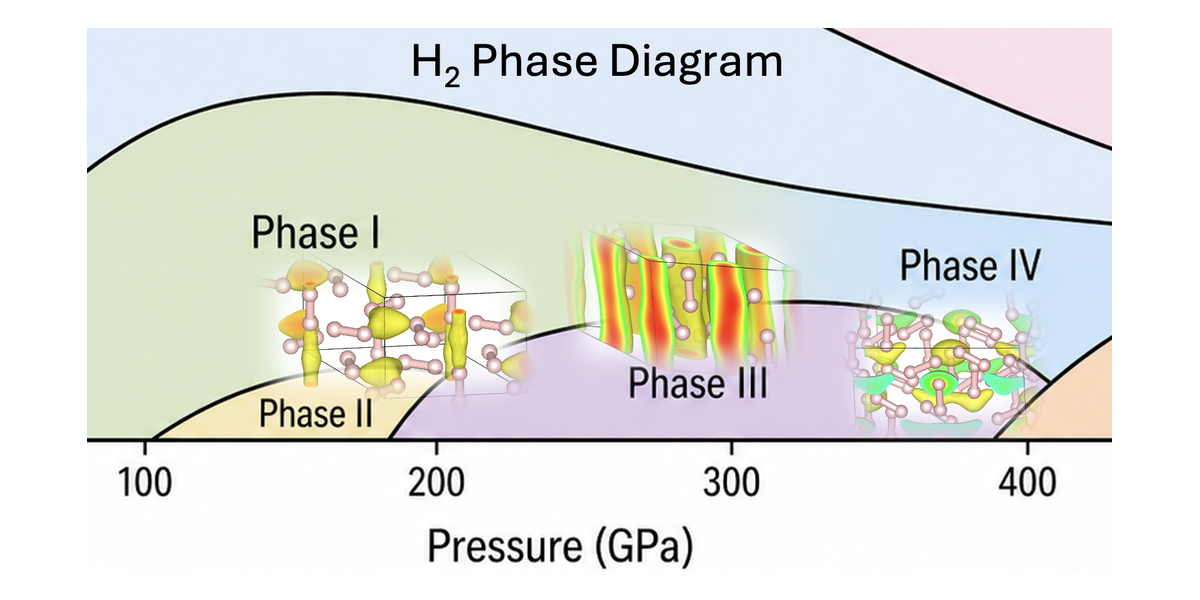
Molecular hydrogen metallization

Electronic delocalization in compressed molecular hydrogen phases.

Scientific question
How does molecular hydrogen move from an insulating molecular solid toward delocalization?
Approach
Electronic structure, band gaps, orbital character, and real-space localization analysis.
Main idea
Pressure can stretch H2 units and push charge into interstitial regions before full dissociation.
HSE06 Band structure ELF Pressure
Poster thumbnail for tunable electrides on monolayer transition-metal dichalcogenides

Reduced-dimensional chemistry

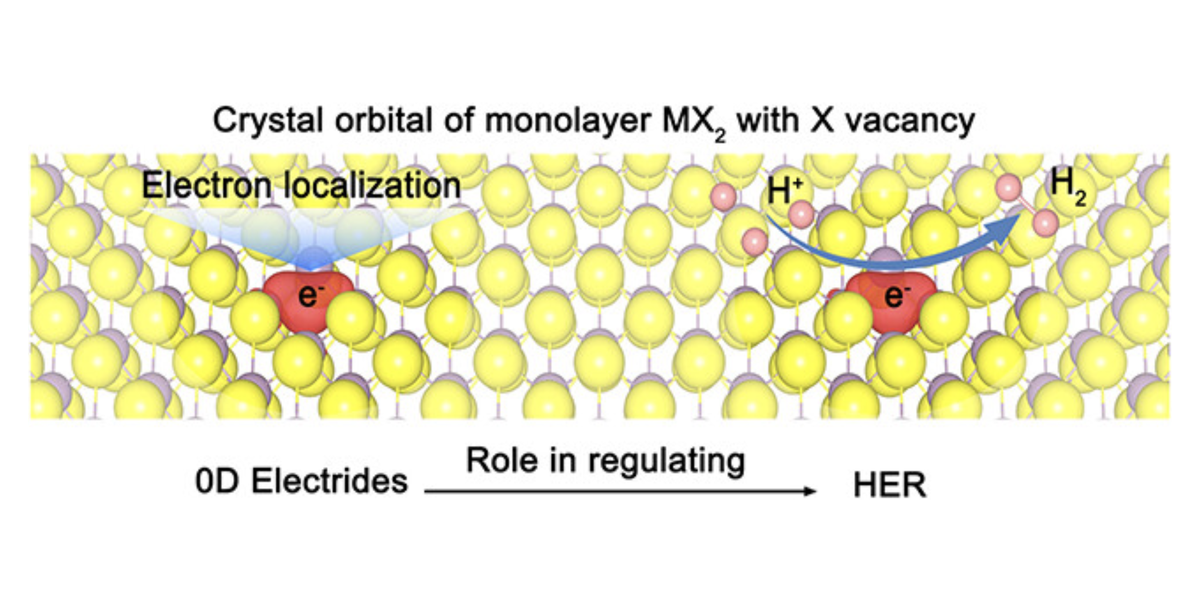
Electrides and interstitial electrons in 2D materials

Vacancy-tuned interstitial electrons in monolayer transition-metal dichalcogenides.

Scientific question
Can vacancies and reduced dimensionality stabilize chemically useful interstitial electrons?
Approach
DFT, ELF, vacancy engineering, and adsorption-energy trends across monolayer TMDCs.
Main idea
Localized interstitial electrons can tune surface reactivity and hydrogen-evolution trends.
TMDCs Vacancies ELF HER
Crystal-structure machine-learning workflow diagram with pretraining, validation, and sampling stages

Reproducible computation

High-throughput DFT and structure-search workflows

Scalable workflows for structure generation, relaxation, post-processing, and screening.

Scientific question
How can structure prediction and electronic-structure analysis be made reproducible at scale?
Approach
Python, Bash, Slurm, VASP, CALYPSO, and PyTorch workflows across local and HPC systems.
Main idea
Reliable automation turns many calculations into a traceable materials-discovery campaign.
Python Slurm VASP CALYPSO PyTorch

Methods and Tools

The computational stack behind the projects.

DFT VASP CALYPSO AIRSS ELF HSE06 r2SCAN PyTorch 3D CNNs Slurm Python High-throughput screening

Selected Research Artifacts

Where the details live.